
Materials
Stocked. Tested. Ready to build.
A full range of substrates from standard FR-4 through RF-grade Rogers, polyimide flex and metal-core laminates — all RoHS-compliant and traceable.
Standard FR-4
General PurposeIndustry-standard glass-reinforced epoxy laminate. Tg 130–140°C. The right call for most digital and analog designs.
High-Tg & Halogen-Free
Thermal PerformanceTg 170–180°C laminates for lead-free assembly, multiple reflow cycles and harsh thermal environments.
RF / Microwave
High FrequencyLow-Dk, low-Df laminates for RF, microwave and high-speed digital. Tight Dk tolerance for impedance control.
Polyimide & Flex
Flexible / High-TempPolyimide films and flex laminates for rigid-flex, high-temperature and dynamic flexing applications. Tg up to 260°C.
Metal Core
Thermal DissipationAluminum and copper-core laminates with thermally conductive dielectric for LED, power and aerospace.
Heavy Copper
High CurrentCopper weights from 2 oz up to 10 oz on inner and outer layers for power distribution and motor control.
Engineering Reference
Published parameters for the laminates we run.
Dk/Df values depend on test method and frequency. Always compare materials at the same frequency and method, and specify the exact core/prepreg system in your stackup notes.
High-performance FR-4
Mid-loss FR-4 for lead-free robustness and improved thermal reliability.
| Material | Dk | Df | Tg | Td | Notes |
|---|---|---|---|---|---|
| Isola FR408HR | 3.68 | 0.0092 | 190°C | 360°C | Mid-loss FR-4 class for thermal-reliability builds |
| Isola I-Speed | 3.64 | 0.0060 | 180°C | 360°C | Low-loss epoxy system for multilayers |
Polyimide (high-temperature / high-reliability)
For harsh thermal environments, rigid-flex and high-reliability rigid boards.
| Material | Dk | Df | Tg | Td | Notes |
|---|---|---|---|---|---|
| Isola P95 / P25 | 3.76 | 0.017 | 260°C | 416°C | High-temp polyimide system for demanding environments |
Panasonic MEGTRON — high-speed digital / low loss
Each generation lowers Df and stabilizes Dk for longer SerDes reach. Compare Dk/Df at the same frequency and test method.
| Series | Dk (ref) | Df (ref) | Tg (DMA) | Td | Notes |
|---|---|---|---|---|---|
| MEGTRON 4 (R-5725 / R-5620) | ~3.8 @ 1–10 GHz | 0.005 @ 1 GHz · 0.007 @ 10 GHz | 210 °C | 360 °C | Step above FR-4 for mainstream networking; familiar processing |
| MEGTRON 6 (R-5775(N) / R-5670(N)) | 3.4 @ 1 / 12 GHz | 0.002 @ 1 GHz · ~0.004 @ 12 GHz | 210 °C | 410 °C | Workhorse ultra-low-loss; strong thermal headroom for backplanes / line cards |
| MEGTRON 7 (R-5785 / R-5680 GE) | 3.63 @ 1 GHz · 3.61 @ 12 GHz | 0.002 @ 1 GHz · 0.003 @ 12 GHz | 210 °C | 400 °C | Lower loss than M6; water absorption ~0.06% |
| MEGTRON 8 (R-579Y / R-569Y) | 3.13 @ 14 GHz | 0.0016 @ 14 GHz | 220 °C | 370 °C | 800GbE-class; ~30% better transmission loss vs M7 at 28 GHz |
Rogers — RF / microwave / mmWave
Stable Dk and low loss across RF and microwave bands. RO4000 series is FR-4-process-compatible; PTFE / ceramic-filled families serve the lowest-loss applications.
| Material | Dk (10 GHz) | Df (10 GHz) | Notes |
|---|---|---|---|
| RO4003C | 3.38 ± 0.05 | 0.0027 | Processes like FR-4; high-volume RF |
| RO4350B | see datasheet | see datasheet | FR-4-like processing + UL94 V-0; RF and high power |
| RO3003 | ceramic-filled PTFE | very low | Strong Dk stability; common for high-frequency / mmWave |
| RT/duroid 5880 | PTFE / glass microfiber | extremely low | Ku band and above |
| RT/duroid 6002 | PTFE / ceramic | low | Stable and mechanically reliable microwave structures |
| TMM 3 / 4 / 6 / 10 / 10i / 13i | wide Dk range | — | Ceramic-filled thermoset; high PTH reliability stripline / microstrip |
Isola — high-speed digital + RF-friendly
A progressive ladder from enhanced FR-4 up to ultra-low-loss systems for 100G+ networking.
| Material | Dk (10 GHz) | Df (10 GHz) | Tg | Target reach |
|---|---|---|---|---|
| FR408HR | ~3.7 | ~0.010 | 180 °C | Up to ~10 G; enhanced FR-4 reliability |
| I-Speed | ~3.8 | ~0.007 | 180 °C | 10–25 G; mid-loss |
| I-Tera MT40 | ~3.45 | ~0.0031 | 200 °C | 25 G+; low-loss digital |
| Tachyon 100G | ~3.02 | ~0.0020 | 200 °C | 56G / 100G PAM4 |
| Astra MT77 | ~3.0 | ~0.0017 | 200 °C | 112G PAM4; RF + digital hybrids |
EMC (Elite Material Co.) — networking, telecom, HPC / AI
Mid-loss workhorse families through extreme low-loss systems for advanced Ethernet, HPC/AI and 5G/RF.
| Material | Positioning | Dk @ 10 GHz | Df @ 10 GHz | Tg (DMA) | Td |
|---|---|---|---|---|---|
| EM-827 / EM-827B | High-Tg low-CTE FR-4 class | ~4.3 (1 GHz) | ~0.019 (1 GHz) | 185 °C | 350 °C |
| EM-370(D) / EM-37B(D) | High-Tg upper mid-loss | 4.0 | 0.015 | 195 °C | 385 °C |
| EM-528 / EM-528B | High-Tg very low loss | 3.9 / 3.5* | 0.0061 / 0.0058* | 250 °C | 420 °C |
| EM-890 / EM-89B | High-Tg ultra low loss | 3.4 / 3.0* | 0.0043 / 0.0036* | 205 °C | 430 °C |
| EM-892K / EM-892BK | High-Tg extreme low loss | 3.00 / 2.84* | 0.0019 / 0.0017* | 215 °C | 420 °C |
* Paired values reflect different glass styles / resin contents. Always specify exact construction in your stackup notes.
Material callout — what to put on drawings
- · Exact laminate + prepreg system (part numbers if known)
- · Electrical: Dk/Df reference frequency and impedance tolerance
- · Reliability: Tg / Td / T288 targets as needed
- · Copper foil type for high-speed (e.g. VLP / HVLP)
- · IPC performance class and required test coupons (TDR, microsection, etc.)
High-Speed PCB Engineering
Built for multi-gigabit signaling.
High-speed PCBs are circuit boards designed to transmit high-frequency, high-data-rate signals with minimal degradation. Once digital speeds enter the multi-gigabit range, traditional PCB rules stop being sufficient — high-speed engineering focuses on signal integrity, controlled impedance, low loss and disciplined noise reduction so the system actually meets its eye-diagram and timing budgets.
When is a PCB “high-speed”?
- Signal rise times are fast enough that trace length affects signal behavior.
- Operating frequencies reach hundreds of MHz to multiple GHz.
- Interfaces exceed several Gbps (PCIe, USB, HDMI, Ethernet, DDR, SerDes, RF/digital hybrids).
- Transmission-line effects dominate signal performance.
Key characteristics
- Controlled impedance
- Accurate trace width, spacing and dielectric thickness for 50 Ω, 90 Ω, 100 Ω targets — minimizes reflections and distortion.
- Low-loss materials
- Stable Dk, low Df from enhanced FR-4 (FR408HR, EM-370(D)) up through ultra-low-loss (Megtron 7/8, Tachyon, Astra MT77, EM-892K).
- Optimized stackup
- Dedicated reference planes adjacent to high-speed signals, consistent return paths, tight power/ground coupling.
- Precision routing
- Length-matched traces, differential pair routing, minimized stubs and impedance discontinuities.
High-speed material reach
Material selection is one of the most consequential decisions in a high-speed design. Specify Dk/Df at the same frequency and test method, and lock the construction (resin content, glass style, copper foil type) in your stackup notes.
| Material class | Examples | Target reach |
|---|---|---|
| Enhanced FR-4 (mid-loss) | FR408HR, I-Speed, EM-370(D) | Up to ~10–25 Gbps |
| Low-loss epoxy / hydrocarbon | I-Tera MT40, Megtron 4/6, EM-528 | 25 Gbps and up |
| Ultra-low-loss | Tachyon 100G, Megtron 7, EM-890 | 56 Gbps PAM4 / 100G class |
| Extreme low-loss | Astra MT77, Megtron 8, EM-892K | 112 Gbps PAM4 / 800GbE class |
| PTFE / ceramic-filled | Rogers RT/duroid, RO3003, TMM | RF / microwave / mmWave |
Stackup best practices
- Signal layers adjacent to solid reference planes.
- Thin dielectrics for tighter impedance control.
- Symmetrical construction to reduce warpage.
- Separate high-speed, power and noisy signal layers.
Design considerations
- Differential pair matching and length tuning.
- Low-impedance PDN with proper decoupling placement.
- Adequate spacing, ground shielding and stitching vias.
- Backdrilled vias and microvias to minimize stubs.
Why it pays off
- Cleaner eye diagrams; lower jitter, skew and crosstalk.
- Reliable multi-gigabit transmission (PCIe, 400/800GbE).
- Improved EMI/EMC behavior and FCC/CE margin.
- Stable performance over temperature and voltage.
High-speed PCB vs standard PCB
| Feature | High-Speed PCB | Standard PCB |
|---|---|---|
| Signal speed | Multi-GHz | Low to moderate |
| Impedance control | Critical | Limited |
| Materials | Low-loss laminates | Standard FR-4 |
| EMI performance | Optimized | Basic |
| Design complexity | High | Moderate |
| Cost | Higher per board, lower system cost | Lower per board |
Applications
- Telecom — routers, switches, 5G
- Data centers — servers, storage, networking
- Automotive — ADAS, autonomous driving
- Aerospace & defense — radar, avionics
- Medical electronics — imaging, diagnostic
- HPC & gaming
Manufacturing process control
High-speed PCBs require tight fabrication tolerances and rigorous process control: precise stackup construction and dielectric thickness, fine-line imaging and etching, advanced drilling and via processing (mechanical, laser, backdrill), impedance coupon fabrication with TDR testing, AOI, electrical test and full SI verification.
Although high-speed PCBs cost more per board, they typically reduce total system cost by improving performance and avoiding expensive redesigns.
Surface Finishes
Finishes for every assembly process.
- ENIG (Electroless Nickel Immersion Gold)
- ENEPIG
- HASL — Lead-Free
- HASL — Tin-Lead
- OSP (Organic Solderability Preservative)
- Immersion Silver
- Immersion Tin
- Hard Gold (Edge Connectors)
- Selective Hard Gold + ENIG
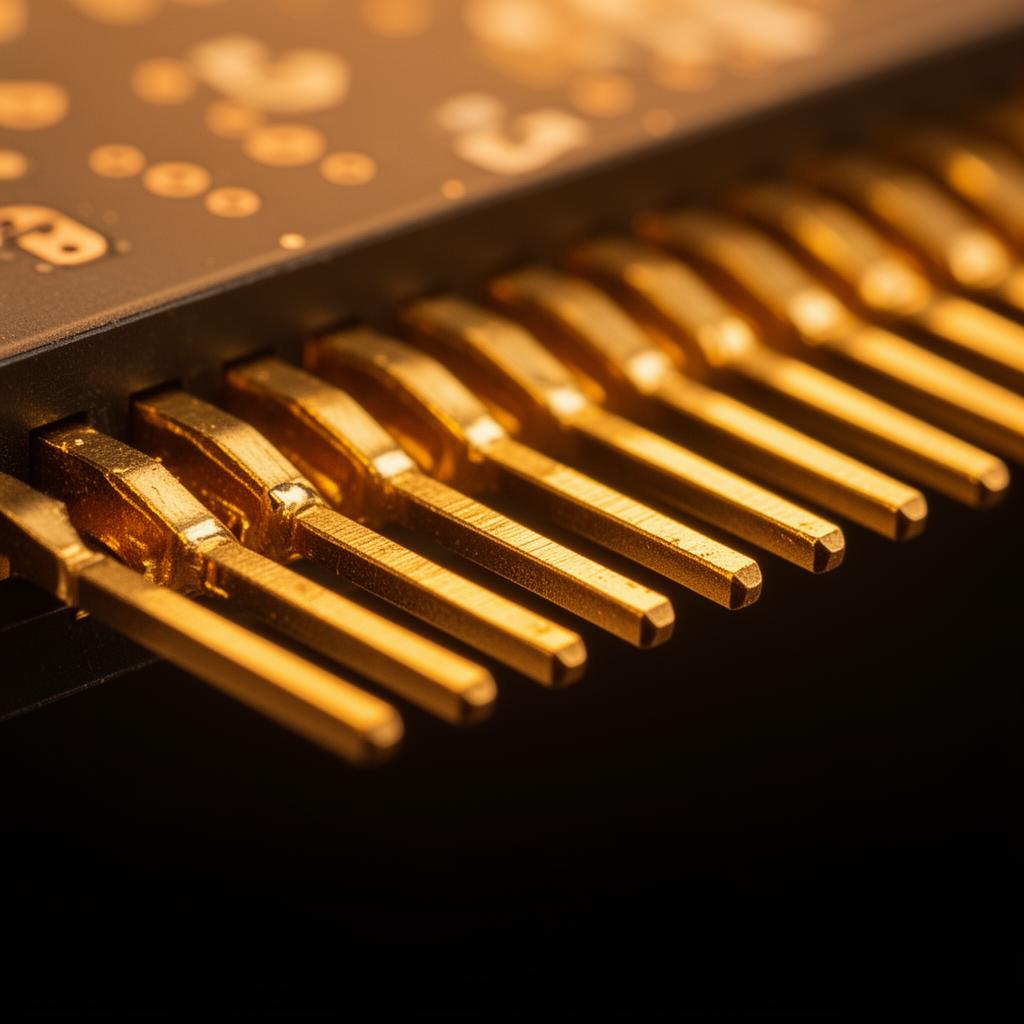
Hard Gold · ENIG · ENEPIG
Solder Mask Colors
LPI mask in any color you need.
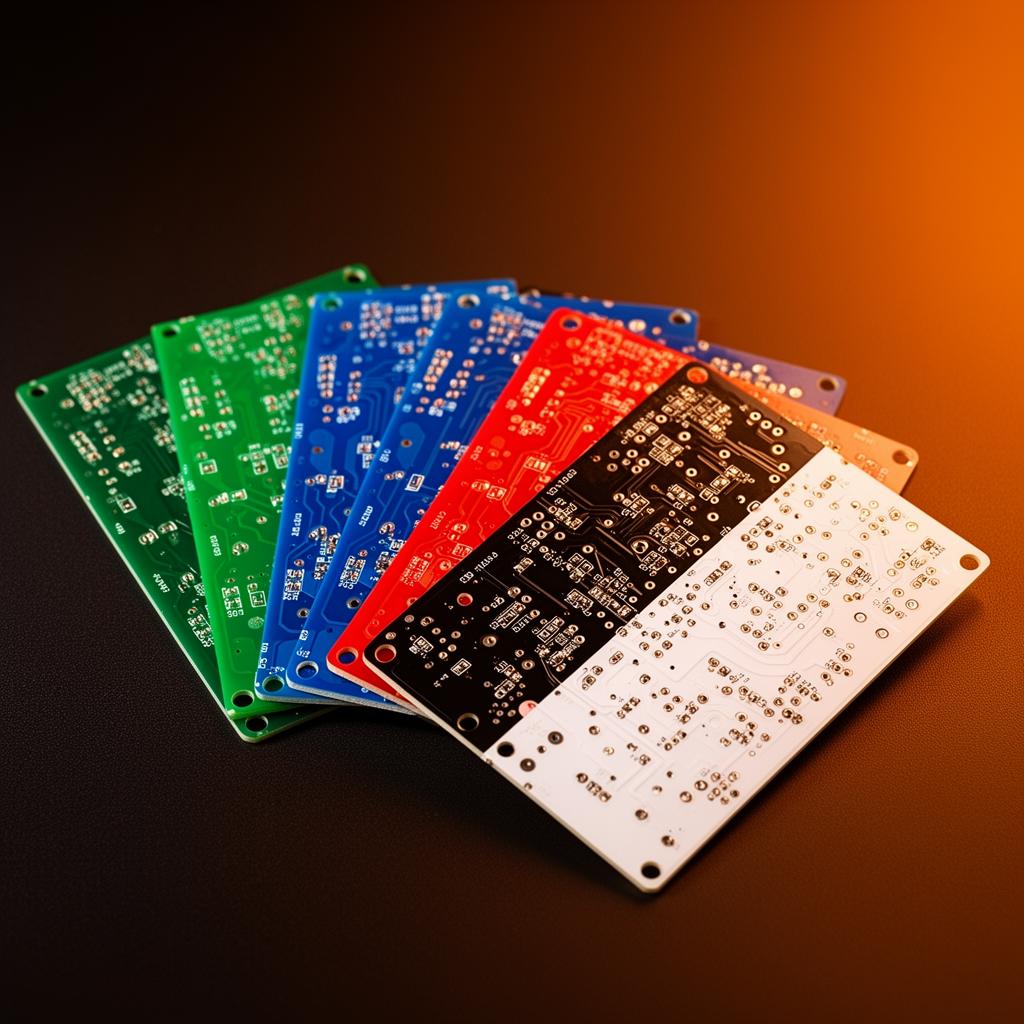
Silkscreen available in white, black and yellow. Specialty masks (peelable, carbon, etc.) on request.